TPR

Author: CHall

  • The Crabs

    by Aeon Bailey


    Aeon Bailey is a journalist from South Carolina who writes news stories for the Summerville Journal Scene. Just as honesty is important in journalism, it is also important in poetry, and they lend an authentic voice to both. They are inspired by horror stories, existential questions and the southeastern landscape.

  • Resilience

    by Sara Shea


    On I-26, heading into Asheville,
    a flatbed rolls beside me,
    stacked with husks of cars—
    mud-caked, mangled, dripping.
    One might’ve been a van, once,
    Hard to tell.
    Metal curled back on itself.
    Windshields blown in
    like lungs collapsed.

    Seven months now since Helene.

    That blaze of neon orange—
    search and rescue spray-paint
    tells the story, marking days
    when the water rose.

    This load’s likely bound
    for the scrap yard
    past the stump dump,
    where mounds of ruin rise
    like new mountain chains
    of debris above the French Broad
    and River Arts District.

    These cars have been sunk
    half a year in silt and shadow,
    rivers swallowing them whole.
    Recovery crawls.
    Federal aid dries up.
    Volunteers come with chains,
    backhoes grunt through sludge.

    Now, as we travel side by side,
    clods of riverbed still drop
    from the bellies of these frames.
    Long threads of kudzu trail behind—
    green pennants flapping
    not quite surrender,
    not quite hope.

    And there, on the flatbed
    snagged in a crimp
    of crushed steel,
    a snarl of multiflora rose—
    white petals open,
    trembling in the wind.


    Sara Shea received her BA from Kenyon College, where she served as Student Associate Editor for The Kenyon Review. She’s pursued graduate studies through the Great Smokies Writing Program at UNC Asheville and at Western Carolina University, where she studied with Ron Rash. Her work has appeared in The Connecticut River Review, Quarterly West, The Static in Our Stars Anthology, Key West Love Poetry Anthology, Amsterdam Quarterly, Gaslamp Pulp, Petigru Review, New Plains Review, The Awakenings Review and Atlanta Review. Shea is the recipient of numerous awards and fellowships, including the New Millennium Poetry Prize judged by UK Poet Laureate Andrew Motion.  Shea writes professionally, producing marketing materials for a fine arts gallery in Asheville, NC.

  • Photography Collection


    Roger Camp is the author of three photography books including the award winning Butterflies in Flight, Thames & Hudson, 2002. His documentary photography has been awarded the prestigious Leica Medal of Excellence and published in The New England Review, New York Quarterly and Orion Magazine. He is represented by the Robin Rice Gallery, NY. More of his work may be seen on Luminous Lint Virtural exhibits.

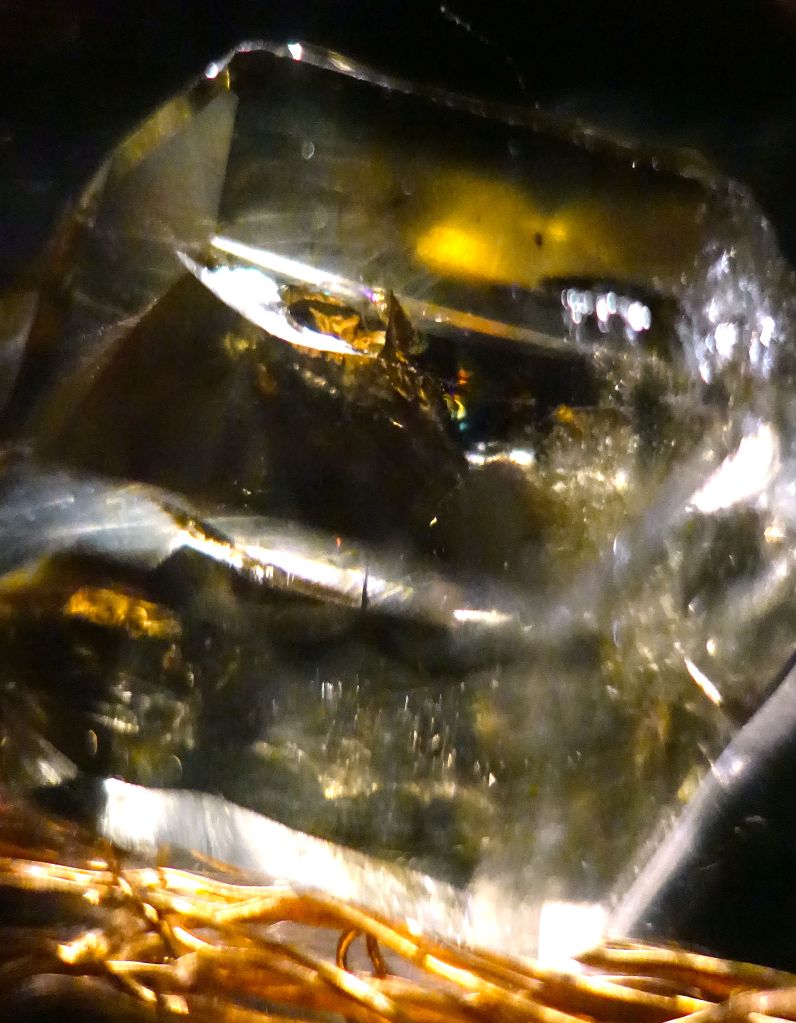
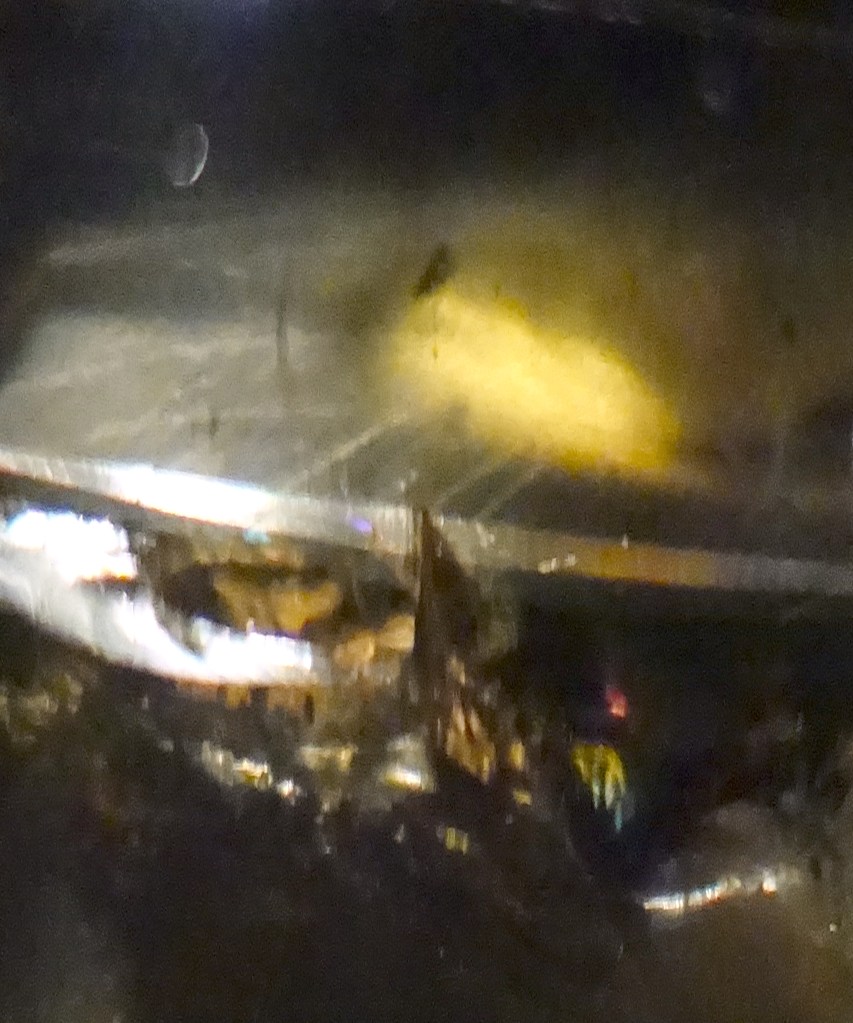
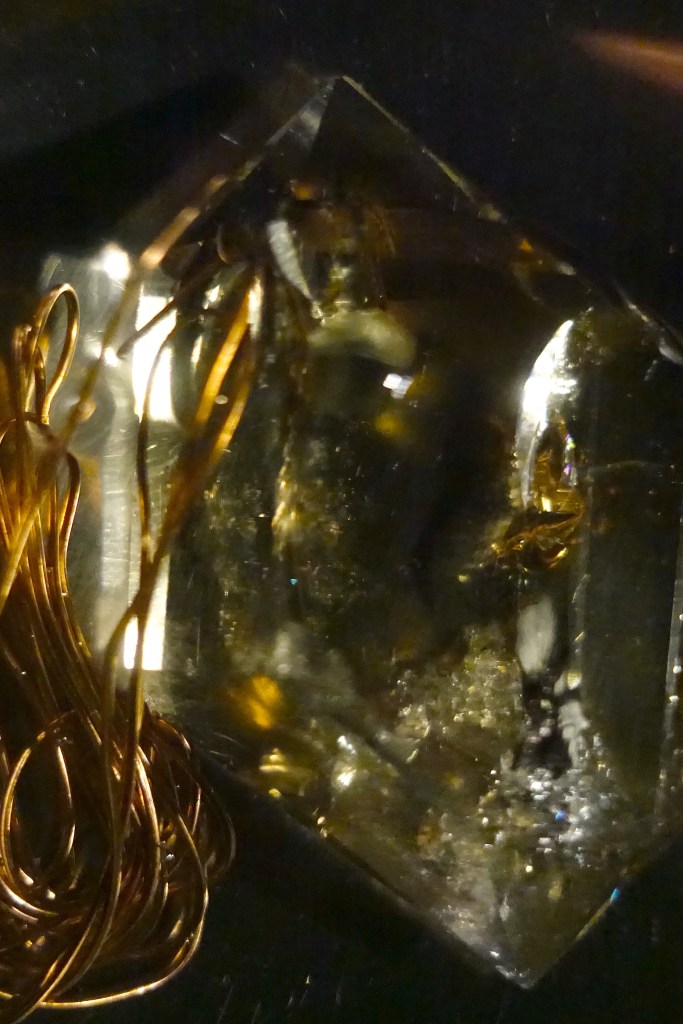
  • Tenebrous Histories in Citrine

    Shipwreck
    Scavenging the Shores of the Dead
    Sophia Oscura

    Artist Statement

    These photographs are the result of experimenting with citrine, a yellow variety of quartz, placed in a bowl of water and exposed to various kinds of light while air from a fan stirs the water. The refraction and diffraction occurring along with other dynamics have produced complex “haunting” imagery. But, the hauntedness is not limited to the ostensibly spectral qualities of this imagery. Rather, the hauntedness also derives from the ways in which these photographic images resonate with historical events—such as shipwrecks—and with a repertoire of representations of such events. For example, for me these particular photos call to mind J. M. W. Turner’s 1840 painting “Slave Ship” in combination with his 1796 “Fishermen at Sea.” Photographic images such as these constitute a sort of optical unconscious, what surpasses our ability to see in the moment, but that is, nevertheless, there, as the photographic process reveals. However, what is “there” involves continual interpretive perception on the part of viewers, myself included. All of these images were gleaned spring 2025 from experiments with citrine in water. They are not generated by water-gobbling AI. 


    María DeGuzmán is a scholar, photographer, writer, and music composer. Her photographic work has been exhibited at The Institute of Contemporary Art (Boston, MA, USA), Watershed Media Centre (Bristol, England), and Golden Belt Studios (Durham, NC, USA). She has published photography in, among many other journals, Typehouse Literary MagazinePhoebe, and New Delta Review. Her SoundCloud website may be found at: https://soundcloud.com/mariadeguzman.

  • Tree With Moss – MacLeod Plantation

    Tree with Moss – MacLeod Plantation | Lawrence Bridges

    Lawrence Bridges’ photographs have recently appeared in the Las Laguna Art Gallery, the HMVC Gallery in New York, and the ENSO Art Gallery in Malibu. He created a series of documentaries for the NEA’s “Big Read” initiative, including profiles of Ray Bradbury, Tobias Wolff, and Cynthia Ozick. He lives in Los Angeles. You can find him on IG: @larrybridges

  • Egg Salad

    by Jade Rivera Bowden


    The cheese had blackened around the edges. She dug her fingernail in, scraping the charred bits onto the floor of her car, slamming the brakes at the last second to keep from rear-ending the car in front of her. 

    Her students had been particularly annoying that day. The closest she could get them to an analysis of Animal Farm was a conversation about Jessica’s hamster’s most recent escape attempt.   

    With the burnt quiche in one hand, she laid on her horn with the other, a gentle reminder to the car in front of her that it was, in fact, clear for them to turn left. 

    No one seems to know how to drive, Sheila thought, even as the slush falling from the sky seemed to be falling harder and faster every minute.

    She got into her third almost-accident as she was pulling into the parking lot of her apartment complex, braking so suddenly that she lurched forward to let a black cat cross her path safely. As she slowly rolled past it, she rolled down her window and hissed.

    She barged into her apartment, threw her keys into the dish with a loud clang, disposed of the failed quiche and wiped the crumbs off her navy slacks.

    It was already pitch-black outside, even though it was only 6pm. She’d had to stay late to watch the stupid play rehearsal. She’d told the fresh-faced theatre director that it was coming along nicely only because it was so bad that she didn’t even know how to give a meaningful critique. Or perhaps she just didn’t want to. 

    She dropped onto the couch, pulling a blanket over herself to block the world out. She did this on the increasingly frequent days that her students consumed her like a cackle of hyenas on a zebra carcass, leaving her nothing of herself but a blank space. 

    It was masochistic, she thought, to imagine that her love of books could translate to middle schoolers. This crazy fantasy she’d had as a college student, ‘inspiring the youth’ or some such bullshit, had become her wasting away each night in a crummy little apartment, extremely single, and going into a job each day that was nothing more than glorified babysitting. 

    Daniel would’ve known what to do, of course. Daniel always knew what to do. He’d been trained to be that way by those blue-blooded parents of his. She thought about that woman who was sleeping in his bed with him, on the right side assuredly, where she herself had slept for so many nights. 

    The thought upset her, so instead of continuing to think, she turned on the TV. The blaring blue light soaked her and she stared blankly at the people on the screen, letting her own pitiful existence slowly drop away.

    “Jane,” she said the next day over cold soggy sandwiches in the teachers’ lounge, “I don’t really know how to say this, but…” she paused for dramatic effect. “The play is going to be a disaster.”

    They both hunched over, laughing into their fists. 

    Jane taught History at Middleboro Middle School. Her classroom was right next to Sheila’s, so they’d become friends. Best friends. Jane had the chubby cheeks of an innocent with the wit of a snake. Her pale blonde hair was always cut short, making a halo around her head. Jane liked to say it was the perfect disguise for her checkered past. 

    Jane had been appointed as Set Designer for the play since the art teacher was out on maternity leave. Sheila had been called in as one of the teachers for the ‘Test Group,’ teachers who would come in during the final week of rehearsals to give notes before the big day. 

    It was an atrocity really that the middle school had even been allowed to do a production of ‘Hair.’ The snappy new theatre director, Angelica, was in her first year of teaching straight out of college and had thought it would be a fun show for the students. But of course, she’d had to change every drug and sex reference to something PG, mangling the show beyond recognition. It was like watching your mind unraveling, personalities splitting and then splitting again, ending in a confusing cultural mush.

    That evening, Sheila sat in the fourth row in the dark auditorium, using both hands to tear into a buffalo wing. A smear of sauce snuck up her cheek. She wiped it off with her hand then wiped her hand on the velvet cushion below her.  

    It had been another exceptionally long day. She’d written Animal Farm on the board and ‘oppression’ next to it, steadying herself for the attempt to spark a conversation that would inevitably disappoint her.

    As she turned back around to face her students, a sharp putrid smell hit her, reaching inside of her and flipping her stomach over. 

    She covered her nose, so shocked by this onslaught that she was unable to speak for a moment. That’s when a girl in the middle of the class started crying. She’d vomited into her own lap, attempting to conceal it from her classmates, but an orangey gravy had started trickling down her legs. The smell alone had made two other students vomit. 

    By the time everyone had gotten cleaned up and settled back in and the girl had been taken to the nurse to sort out whatever hadn’t agreed with her, there were only 10 minutes left in class.

    Sheila hadn’t been hungry for lunch. She’d caught traces of bile on the air for the rest of the day, so she was starving by the time school was over. She feasted on the wings, eating with the speed and consistency of a machine while delighting in this awkward version of ‘The Bed.’

    Sheila had looked up the actual play as a means of comparison. She knew that this song was supposed to be about sex. Angelica had made it about going to sleep. A particularly delicious sleep.

    The boy singing must have gotten ahold of the original lyrics, too He sang loudly, “You can tease in bed, you can please in bed—” 

    Angelica interrupted him. “No, no Henry. It’s You can EASE in bed, then you pick up the TEA CUP and—”

    “Sheila?” 

    It was whispered right next to her as she’d been mid-bite, hunched over, tearing meat away from bone with her teeth.

    She turned, body tensed like a cat, only to see Daniel right next to her.

    The fact that he was the principal had been fun at the time. Incredibly sexy. But now it made her skin crawl, her ex-lover being her boss.

    “Oh, hi” she scraped out.

    “May I?” he gestured to the seat next to her.

    “Sure”

    She stuffed the wings under her seat, but the overpowering spicy and barbeque-y smell enveloped them. Daniel didn’t react.

    “I was so sorry to hear about Molly throwing up today,” he whispered, looking straight ahead. 

    How to respond to that? “Well, sure.”

    “How are you doing?” he asked. The fact that they were whispering in the dark brought back an intimacy that made her tingle. She diligently tried to clean her mouth with her tongue, running it over her teeth, around her cheeks, desperate for her breath not to smell. 

    “I’ve been better” she whispered straight into his ear, her chin just barely grazing the fabric of his blazer. She felt a chill like she’d just dived into a freezing lake face-first.

    He kept his gaze on the stage. “Understandable,” he said, flatly, nodding. 

    They sat like that together, not uncomfortably, for a few moments. 

    The ten boisterous children in pajamas on stage pretended to yawn, singing about how the bed was “an invention so good.”

    Daniel scoffed lightly, turning to her again. “You know, this play was originally a form of protest against the war on drugs.”

    “Yeah, all that they’re protesting now is our sanity.”

    Just then a sharp, loud and wildly out of key note startled the whole room. Even the child singing clapped their hand over their mouth, blushing.

    They bit back laughter, pressing themselves into the backs of their seats in the cavernous dark room.

    He stayed there for the rest of the rehearsal, right next to her in a sea of empty seats. She could hardly remember what it had felt like to be hungry.  

    The next day in the teacher’s lounge over bland veggie fusilli, she told Jane everything.  

    “And he just sat there?” Jane asked, “The whole time?”

    Sheila nodded smugly, inhaling the smell of chicken wings that was still beneath her fingernails. 

    On her way home that night, she’d watched the trees reaching their bare limbs straight up, tangling them in the night sky. When she plopped onto her couch, she hadn’t turned on her TV. Instead she’d picked up an old favorite, Lady Chatterley’s Lover.

    The next day was her final pre-viewing of the play. She’d gotten meticulously dressed that morning– her long red and black patterned dress with the buttons down the front. Buttons that could be unbuttoned, she thought.

    Her classes flew by uneventfully, a welcome surprise. They’d even gotten into a mildly interesting debate about Oscar Meyer wiener when discussing Animal Farm. 

    When the last bell finally rang and the kids were all out of her classroom, she’d used her reflection in the window to re-pin her hair. She spritzed her neck with perfume one side then the other. Then she lifted up the bottom of her dress and gave herself a little spritz down there. She chugged a Slimfast then headed to the auditorium. 

    She sat in the same seat she’d been in the other night, trying to look interested. She pushed her chest out to create a luscious silhouette, just in case anyone was watching her. 

    Angelica had struggled with this number. ‘Walking on the Moon’ was supposed to be about a drug trip, but she’d decided to make the song about a flow state while playing an instrument. Lines like “Oh my God my bow is so soft. I love my cello” didn’t really land. 

    She felt a hand on her shoulder and shuddered. She smelled his musky cologne even before she turned to look, rapturous. 

    “Do you mind?” he asked, gesturing to the seat next to her. 

    “No not at—” she turned to see Daniel, perfect Daniel, the tweed of his blazer complementing his salt and pepper stubble. But then something emerged from behind him. Someone. Her. 

    She wasn’t even a teacher. She was the secretary in the main office, a lowly and uninteresting position. Sure, Daniel had a bit of a reputation. All the female teachers knew that. But Sheila hadn’t expected anything to come out of his trips to the fax machine, his requests for the secretary to help him fix it. Their romance budding over the warm paper.

    “Hi, Sheila”. The way she said it, the tone in her voice. Sheila’s lips curled inward, a smile as thin as a pencil line. 

    They sat there, right next to her, for the duration of the play. The secretary would lean over and whisper little things in his ear, how cute a child was, how she liked that hippy costume. Sheila was shocked that their relationship had lasted. No, not shocked. Angry. Not angry that he wasn’t with her, angry that he, her Daniel, had chosen someone so blonde, so thin, so endlessly appropriate. 

    Sheila watched them without turning her head, craning her eyes as far to the left as they could go. She saw how he tilted his head toward her when she spoke, a catcher’s mitt for her every little musing.

    He would smile, nod, but never provide a thought of his own. 

    The ‘Let the Sunshine’ song had largely been kept the same, unbearably joy-filled.  Sheila left as soon as the lights came up, fighting her way down the long row, toggling seat bottoms up and down in her wake. She could still hear their voices behind her, the secretary’s laugh like the tinkling of Christmas bells. A sound that was obviously meant to please him.

    “Jane.” Sheila barked into her phone when she was in the foyer. “Meet me at the roundabout.”

    A little while later, they were pulling up to his house. His front porch lights were on, welcomingly, but there were no other lights on in the house. Perfect, she thought. She’d hoped to get there before they got home.

    It had been more expensive than she thought it would be, buying all those eggs. More expensive than she could afford on her teacher’s salary, really. But she’d filled up her trunk anyway.

    The first one had missed by a long shot, landing somewhere in the rhododendrons, but the aggression of it had felt marvelous. Her arm whooshing through the air, her muscles ignited. She and Jane turned to each other, grabbing one another’s hands, laughing, jumping up and down.

    That’s when it really got fun. The shock of bright yellow dripping down the white siding was like seeing a rainbow for the first time, delightfully out of place.

    They decorated as much of the house as they could with yellow streaks. Jane even cracked some eggs on the front porch so Daniel and the secretary would have to step through them on their way inside. 

    On her last carton, Sheila hurled one right at the bedroom window, the one she’d been on the other side of so many mornings. To her surprise, the window broke. A loud alarm pierced the air. 

    They shrieked, but they didn’t really care. They were in the place beyond fear. Sheila looked down at the carton in her hands that only had two eggs missing, otherwise full. She thought of what she’d do with them if she brought them home. Maybe she’d make an egg salad. The thought felt grotesque, eating eggs that Daniel had tainted. 

    “Let’s finish this carton Janey” she shrieked so Jane could hear her.

    With the blare of the alarm coating the night, they yelled their final curses and hurled the last of the eggs right at the front door. 

    As she and Jane turned to leave, they were lit up by the headlights of a car turning into the driveway. 

    They froze. Jane turned to her, but Sheila tilted her head back and laughed, letting the beam of the headlight coat her open throat. She squared off to their car, licking her lips and giving them a big juicy smile. As if it was them who didn’t belong there. As if she’d just given them a gift and was expecting a thank you.  


    Jade Rivera Bowden is a current MFA student at USC and a graduate of Barnard
    College of Columbia University. One of her short stories was published in Silent
    Auctions magazine and she has recently finished a novel I Have a Great Opportunity for
    You which she is currently querying. She lives in a little brick house outside of the SC
    capital with her big fluffy dog and little tuxedo cat.

  • Rotten Clementines

    by Patrick Adkins


    Jay lived in a slumped beige duplex just past the Watershed Glen train tracks—a place that looked like it had been built in one frantic day and forgotten the next. Mold ghosted the air vents. The front step clung to the doorway like a scab—too tender to tear away without drawing blood. Inside, a secondhand couch sagged under the weight of mildew and old bourbon. Jay had never tasted liquor that cost over thirty dollars, and even then, it was expensive in the way an oil drum is expensive—by volume, not value. Morgan, his girlfriend, sold weed from the bathroom vanity, calling it “small-batch botanical work” like she was distilling artisanal gin. But there was nothing small batch about it. Morgan got her weed from some old redneck who lived off Pauli’s Creek, and she always smelled like sweat and linen after every re-up.

    Jay dropped out of Tideland Coast College twice—once for not showing up, once because he forgot he was enrolled. His memory wasn’t bad, just badly applied. He had a habit of drifting, sealing himself off from the world, its clutter, and the parade of assholes pretending to search for answers. Most days he lay on the floor in busted cargo shorts, watching closed-captioned cooking competitions. He didn’t cook. Barely ate. But there was a strange comfort in watching people pretend food mattered—like those assholes again, only these had found the answers, crushing them into pesto or shaving them into consommé, feeding envy into every crevice of Jay’s molars.

    Morgan kept the machine wheezing along. She’d vanish for hours and return smelling like spearmint, sweat, and car upholstery. She once handed Jay a joint she dubbed Savannah Fog, promised it would “reset his perception.” He coughed for ten minutes and felt the same—just wetter. Jay didn’t think his perception needed any sort of calibration, but then again, maybe that was precisely the issue Morgan was talking about. So Jay just sat there. His cargo short seams bursting with ambition, and his lungs—heavy with intention.

    Then came the clementines.

    It started one limp Sunday at the Old Ashe Market, a half-collapsed farmer’s stand behind the ruins of a bowling alley off Highway 601. Jay had walked there on instinct, afraid if he didn’t leave the house, he’d dissolve fully into the upholstery or be swallowed by his cargo shorts, hands first. His phone was dead. Morgan was hosting a “Meditative Edibles” seminar in what had been a Chinese buffet. That’s where he saw them—clementines in a dented bin, left too long in the sun. Wrinkled, concave, their skin puckered like drowned hands. A few were split at the seams, leaking pale juice that pooled in the corners of the metal like sweat in a fever dream. Mold had begun to spider across their rinds—green-gray and delicate, like frost with a secret. One was almost beautiful in its ruin, furred over with a lacey bloom that seemed to pulse gently in the heat.

    He stared, not in disgust, but with a quiet ache, as if the fruit had whispered something only he could hear. Something about being forgotten. Something about softening slowly while the world sped on. He felt it twist in his ribs. A kinship. He took two. No one stopped him. Nobody wanted them. At home, he placed them in the bathtub. Not tossed—placed. Gentle, like they were sacred or broken. He sat on the floor, half-pulled the curtain, killed the light. The fruit didn’t glow or hum or rot in fast-forward. It just was—softening, dimming, becoming. And that was enough.

    He went back the next week. Stole five, then ten. By September, the tub held a heap of sunburned ghosts. Some sagged open. Others wept syrupy tears. A few bloomed with fine green mold, delicate as lace. The air turned syrup-thick—swampy and sweet like perfume worn too long.

    Morgan eventually noticed.

    “You running an experiment?” she asked, folding a hoodie that didn’t belong to her.

    Jay shrugged. “I’m keeping track of time,” he said. “Sort of.”

    She nodded, handed him a bowl of her bathroom weed, and asked if he wanted to try float therapy in Grimwood. Jay felt like telling her he had been floating and that he just wanted to be grounded, but just as he was about to express this, he was interrupted by a hollow knocking on the door. Mr. Wheeler. The other half of the duplex. Mid-seventies, maybe more. Always in a faded fishing hat, always cradling a plastic pitcher of sun tea, even on cloudy days. He knocked slow, like he was checking for a pulse.

    “You growing rot in there?” he asked one Tuesday.

    Jay shrugged. “Sort of.”

    “Did the same. After Nam. Kept peaches in a cooler till they split like hearts. Needed to see something that didn’t lie.”

    Then he turned and walked off, slow as a sentence you don’t want to hear the end of.

    After that, Wheeler started leaving things on the porch. A cigarette lighter with a dolphin sticker. A cassette labeled STORM SERMON 1993. A crumpled lily wrapped in foil. Jay left clementines in return—always soft, always bruised.

    Then he found the one.

    Tucked behind a box of collapsing squash at the market. Small. Firm. Flawless. No bruise. No puncture. It sat in his hand with the weight of something that knew it had been found. He placed it atop the mountain in the tub.

    And waited.

    A day. Then three. Then ten. The others rotted as usual, sinking into themselves like wet lungs. This one didn’t blink. Didn’t sag. Held its shape like a lie. Jay started waking with orange shadows beneath his eyes. Quit watching the Food Network. His dreams swam with pulpy suns, sticky hands, citrus pulp pressed like communion wafers against his tongue. Morgan said he whispered in his sleep: “It hasn’t died yet.” And “I think it’s waiting.”

    Then one morning, a note slid under the door. Crinkled. Orange-stained. Neat, narrow handwriting:

    Don’t trust what stays the same.
    The man next door once buried something that wasn’t fruit.
    —W.

    Jay stepped out, watched Wheeler kneeling in his hydrangeas, whispering into the dirt. He didn’t ask. Didn’t want to know. That night, Jay told Morgan he was leaving.

    “Leaving Watershed Glen?” she asked. “Or, like, leaving?”

    “I don’t know,” he said. “Both?”

    “Okay,” she said, flicking lavender paint across a rolling tray.

    Jay stepped outside, rolled something—a whisper of Savannah Fog, maybe. Or just paper and hope. The world leaned sideways. The sky turned a sick gold. He reached into his pocket. The clementine was still there. Dense. Untouched.

    As he passed Wheeler’s door, the old man was digging again. Elbows deep. Humming. Jay didn’t stop. Didn’t look back. But he heard him—Mr. Wheeler, muttering into the soil:

    “Some things rot. Some things wait for you to rot instead.”

    And Jay kept walking, unsure if the fruit was a miracle or a trap—
    but knowing, finally,
    that it was time to go.


    Patrick Adkins was born and raised in Charleston, South Carolina. He now lives in
    Aiken, South Carolina with his wife, Dr. Chloe Adkins, and their son, Ambrose. His
    writing often blends the familiar and the surreal, exploring the strange edges of ordinary
    life.

  • Sirens

    by Dylan Hopper


    She found Cali standing barefoot on the landing of the rusted billboard again. This was their spot, overlooking a pond to the north and tall enough to peek over the trees that lined the  highway to the south. She was a vibrant oddity against the double-sided, sun-blanched  advertisement for Mac’s BBQ Farm. The grinning pig logo appeared menacing, colorless as a  skull, peeling from the bottom as if trying to reach out and caress her legs.  

    Cali was dressed in the baby pink, silk kimono she had stolen from a vintage shop down  by the pier. It caught in the warm breeze and danced around her as she moved closer to the edge  and waved. She kneeled near the top of the ladder, pink silk rising with the wind and spreading  out behind her. Her floor-length skirt seemed an imitation of her mermaid’s iridescent fin, fitting  tight over her hips and tapering in at the ankles. She exuded kindness in her careful movements,  so deliberately fluid, it often seemed as if she was still moving through the water. In many ways,  Cali never left the observation tank, and in many ways, neither did Mara.  

    When she reached the base of the billboard’s ladder, Mara climbed. Cali offered her hand  to her on the last two steps. On the landing, they moved to the edge closest to the pond and sat  side by side.  

    Cali stared into the water below. A cypress knee poked through the center of the pond; a  white crane stood atop it on one leg. “Do you ever get that strange urge to jump?” she asked. 

    “L’appel du vide,” Mara said. “It usually only hits me when we start to climb down.”

    Cali scoffed. “Okay, you know I didn’t have a Cajun granny, so you’re going to have to  tell me what the hell that means.”  

    “Means the call of the void,” Mara said.  

    Cali laughed and said, “Trust the French to have a phrase for everything.” 

    A bloated shadow moved beneath the surface of the water. Mara thought of David, of his  blank, fish-like eyes. The memory of his lingering gaze evoked a primal sense of dread and  though it was well over ninety degrees and muggy, her skin pimpled with goosebumps. She  knew Cali was thinking of him, too.  

    “I feel the call of the void all the time now. It’s as if the universe is begging me to do  something reckless,” Cali said.  

    “Like punch David in the face?” Mara asked, grinning.  

    “I don’t know what I’ll do when I see him,” she said, pulling the sides of her kimono in  around her. “Can’t we just mail our resignation letters?” 

    David had been particularly vicious with Cali lately. She had fallen from his good graces  ever since her hair became algae-tinted from the motel pool’s acidic levels of chlorine. Whenever  he spotted her, he called in a cruel, carnival-barker voice, Come one, come all! Witness Medusa  underwater! She can make a man hard with a single look! 

    “We gotta finish this show,” Mara said. “Get our last paycheck from him. After that, I  promise we’ll get on the road.”  

    Cali nodded. Below, an alligator bobbed and broke the pond’s surface. It opened its  mouth wide, as if in a yawn. It paused, jaws agape. Mara imagined its teeth more menacing than  its true nature, large and wicked sharp like pieces of glass.  

    Mara felt Cali’s eyes on her, watching her watch the alligator below. She thought of  David’s sweaty palms and unabashed leering. 

    “How much longer do we have?” she asked. 

    “Not long. Show’s at two.” 

    “We should go,” Mara said. 

    Cali nodded and rolled her skirt up around her thighs before finding footing on the ladder  and starting her descent.  

    Mara studied her, how easily her limbs acclimated to gravity’s pull and settled into that  sinking feeling. The wind lifted and her kimono fanned out behind her like a siren’s wings. For a  moment, she pictured an alternate reality, one where they covered their skin in feathers instead of  silicone scales, where they floated on air and never held their breath. A sudden urge to jump  called to her from somewhere below, the alligator or the shadow of a man reflected in the pond’s  surface. She gripped the warm, iron slats of the ladder and followed her, uneasy all the way down. 

    The back window of Cali’s white VW bug was obscured by their duffle bags, stacked on top of one another.  

    The car puttered to life, and they pulled out of the parking lot. The engine light flickered  on and off at the slightest rattle. In spite of the heat, December was a shell of a month, a  reverberation of Myrtle Beach’s typical activity. As they ambled along Ocean Boulevard toward  the aquarium in sparse traffic, Mara took in the strip malls of beach gear gift shops, seafood  restaurants, pancake houses, and mini-golf fun parks along the way as if for the first time,  knowing it would be the last. Though they only lived here for six months, Mara felt some  fondness for the cheap and desolate star-spangled charm of this town. She committed to memory  the amalgamation of stores with their American flags cradled in dark gravel parking lots like  oysters in a marsh-bed. The Pearl: Surf Shop had wrapped Christmas lights around the lobster  head mannequin in its display window. Even the local scammers seemed to be in the spirit, green  and red spotlights illuminated an advertisement for $20 Helicopter Rides!

    The aquarium was visible from the main road, the far left side of the building marked by  a monstrous metal fin, the main entrance sheltered within the mouth of a reconstructed shark’s  head. During the summer, kids loved to run between the pillars of teeth lining its bottom jaw, but  today, the parking lot was almost empty. They pulled in their designated employee space and  locked the car. 

    “Ready?” Mara asked.  

    Cali nodded, twisting the tails of her kimono in her fists. Mara slung her arm around her  shoulders and squeezed. Together, they walked over the glimmering concrete and into the  aquarium. The shark’s glass-door mouth swallowed them whole.  

    David was absent when they arrived in the lobby, but the sharp alcoholic scent of his  cologne lingered in the staff-only hallways and in their dressing room, a mist that promised a  full-bodied apparition. 

    They sat at their vanities and applied their waterproof makeup. A ritual in transformation,  they fulfilled David’s vision for mermaids and became little Marilyn Monroes with fins. Cali  painted a beauty mark in the top right corner of her cheek. Mara stained her mouth bright red.  

    On the observation deck, they sat and rubbed Vaseline on their legs. With skin slippery  against the grated, metal runway, they wriggled into their mermaid tails. The tank beneath them  was a perfect oval and reminded Mara of a great monocled eye peering up at them, as expectant  as the audience below. The void called to her here, too. The water smacked against the confines  of the tank, rippling in an eternal simulation of current and tugging at that reckless urge inside  her chest. She heard in the whining trill of the industrial water filtration system, in the hiss of the  exposed pipes, in the buzz of the overhead spotlights, an irresistible harmony calling, Dive, dive! 

    With their legs bound in silicone, they slithered toward the water and lowered their  bodies into the overhang net.  

    David’s voice boomed, omniscient from the intercoms above and from the speakers  below deck, “Please put your hands together and welcome our two real life mermaids!”  Submerging was as simple as walking through a door, now. The water, a warm and  uterine-like fluid, cradled their bodies, soothing them into a space between reality and void. The  fish, a haze of color, brushed across their armpits and exposed abdomens. They embodied myth,  suppressing the natural instinct to breathe, feigning serenity. With a practiced motion of their  poised fins, they shaped hearts out of bubbles, and with twin winks, pushed their hearts toward  the blurred image of a woman behind the glass. Mara imagined she was like them, in love with  the idea of being in a different world. 

    In the dark of the observation room, the barrier between them seemed like a mirror.  Floating and posing together, their faces overlapped the woman’s in turn and perceptions  mingled. Without knowing who she was, they identified how she occupied the inside of her body.  They undulated their torsos, fluttered their tails. She knew what it meant to act in accordance  with the theatrics of living as a beautiful creature. They performed ease— low on oxygen, behind  passing sharks, even when the spectators could not see them.  

    They knew she executed transformative rituals to resemble fantasy, too.  

    Unable to speak, they fashioned their lips to the pre-recording and sang through David’s  loud speakers, gesturing to her, “Oh, we wish we could be like you!”  

    Breaking through the water’s surface and into the glare of the overhead lights ruptured  the illusion. They skinned the silicone fins from their legs, squeezed their hair free of salt water, wrapped towels around their torsos, headed back to their dressing room. Whether it was due to  placebo effect or lack of oxygen, Mara couldn’t say, but stripping free of the fantasy always left  an ache. The joy they portrayed underwater was never real, and yet, a sense of loss lingered  whenever they returned to their bipedal bodies.  

    Cali stared at her reflection in the dressing room mirror, adjusting and readjusting her  kimono.  

    “Hey,” Mara said. “Listen, why don’t you wait in the car? I’ll get our paychecks, give  David our letters.”  

    “No way, Mara,” she said, eyes wide. “I can’t leave you with him.”  

    “I’ll be okay,” Mara said, not knowing if it was true. “He’s been on your case more than  mine.”  

    She fisted the tails of her kimono, massaged over the thinning, silk fabric. “Are you  sure?” she said.  

    Mara fished the keys out of her tote bag and handed them to her. “If I’m not out in  twenty, come in and get me?”  

    Cali pulled her into a hug and squeezed tight before letting go.  

    It was customary at the end of two weeks to stop by David’s office and retrieve their  paychecks, but Mara had never done so alone. The hallway seemed longer than usual. The  barebones nature of the linoleum tile and exposed pipes, the hissing and grumbling sounds of the  water filtration systems reminded her of the phrase in the belly of the beast. If the aquarium was the shark, David was its stomach acid. Corrosive is an understatement, one of the scuba divers  once told Mara. A shark’s stomach acid is strong enough to dissolve metal.  At the door labeled, MANAGER, she stopped and knocked.  

    “Come in!” David called.  

    She took a deep breath, as if preparing to submerge, and opened the door. 

    “Ah,” he said, his mouth twitched as if repressing a frown. He rose from behind his desk  and gestured to the chair in front of him. “Just you today, honey? Where’s Medusa?” 

    “She’s not feeling well,” Mara said. She remained standing and used the chair as a barrier  between them. She was hyperaware of her limbs, of the tension coiled in her trembling hands. 

    “Seemed just fine to me when you gals were swimmin’ out there,” he said, opening a  drawer and sorting through papers.  

    “We’re paid to seem fine, aren’t we?” she asked.  

    He chuckled. “Speaking of pay,” he said, retrieving their checks and handing them to her. 

    She took their paychecks from his outstretched hand and shoved them into the bottom of  her bag. “David, I’ve got something for you, too,” she said. “Here are our letters of resignation,”  she said, placing the letters on the chair in front of her.  

    As if she hadn’t spoken, he stepped around his desk and said, “My first love, she was a  lot like you. She was a good girl, never wanted to say no to me.” With one foot, he nudged the  chair to the side. “Do you find it difficult to say no?”  

    One of his meaty hands circled her wrist, the other curled under her shirt and caressed her  bare stomach. David’s mouth spread into an ugly and open maw, emitting muffled phrases. She  felt as though she was underwater again, the pull of the artificial current pressing incessant around her, her heartbeat a steady drum dissolving his words into void. Beneath the surface, a  hum like the hissing of the water filtration system, a call from deep inside her body to do  something reckless.  

    “No!” she screamed, shoving him with all her strength and tearing away from his grasp.  His pot-bellied body wobbled and stumbled backward into his desk. Her legs carried her down  the hallway, the buzzing luminescence blurring the scene, her breath steady reverberations of no,  no, no. His heavy-footed gait echoed behind her.  

    She broke out of the shark’s glass-door mouth and ran through the parking lot. It was  dark out, but she spotted Cali under one of lights, leaning against the trunk, mermaid tails  clasped in her hands. When Cali spotted Mara, she raised her arms and waved the tails.  “Mara!” she called, grinning. “Look! Look!”  

    “Cali!” Mara said, panicked. “Get in the car!”  

    Mara looked over her shoulder at the aquarium’s entrance. The figure of a large man  strode out from between the shark’s teeth.  

    Mara grabbed the tails from Cali’s hands, yanked open the passenger-side door, and  shoved the tails into the backseat.  

    “Theft! Theft!” David’s voice boomed across the lot.  

    “We have to get out of here!” Mara said, climbing into the passenger seat and slamming  the door shut.  

    “Fuck!” Cali said, closing the driver’s side door and cranking the ignition.  Mara turned to look over her shoulder. One of the lot’s lights illuminated David as he unlocked his Ford truck and climbed inside. Cali shifted the car into drive. The tires squealed as  their car sped out of the parking lot and pulled onto the main road.  

    “What the hell happened?” Cali asked. “Did he touch you?”  

    “Why did you take the fins?” Mara asked, then stared at the reflection of his murky truck  headlights in her sideview mirror. “Cali— He’s following us.”  

    “I know, I know,” she said, making a sudden right turn without using her blinker. 

    Mara’s breath shuddered between her teeth. Her body was still shivering. 

    Cali made a sudden sharp left turn, narrowly escaping collision with oncoming traffic.  “Sorry,” she muttered, glancing again in her sideview mirror.

    “I took the fins because  they’re part of us, a part of our lives I didn’t want David to keep.”  

    Mara nodded. She wanted to tell Cali she understood, but before she could, a pair of truck  headlights appeared in their rearview mirrors, murky and unmistakably David’s. The truck  revved its engine, speeding up and riding so close to their bumper he nearly made impact. Cali  hissed and turned down another street before accelerating. Mara looked out the window. They  were on the highway along the marsh. Cali turned on her left blinker. He slowed. His truck’s left  turn signal blinked back at them.  

    “We can’t risk him colliding with us,” Cali said, staring straight ahead. “We can’t afford  another car, and it’s too dangerous to wait around on the bus when he’s looking for us.”  Her voice was unlike anything Mara ever heard, deep and tranquil as a monk’s.  Illuminated by the moon, the billboard rose from the marsh as tall and ominous as the cross.  “Get ready to climb,” she said. 

    A few feet from the base of the billboard, she yanked the car into park, ripped the keys  out of the ignition. Mara was the first to mount the ladder. She climbed, her limbs rising and  falling in a familiar mechanical motion. She stared and envisioned standing upon the platform  until she lifted her body onto it. She turned and peered down. Mara was right behind her, but the  unmistakable figure of David lumbered up after her. She reached out to her, and together, they  muscled Cali up onto the landing beside her.  

    “Come on,” Cali whispered. Holding hands, they rounded the billboard and thinned their  bodies against the pond-facing side. She leaned over and whispered in Mara’s ear, “L’appel du  vide.” 

    “Cali, no—”  

    The platform shook, and Cali drew her hand over Mara’s mouth. His steps reverberated  beneath their feet. His panting gave his position away. They heard him amble along, coming up  on their left. Cali let go of her hand and moved closer to his side. He stepped around the corner.  His gaze swept along the landing. She raised her arms, her kimono spreading out behind her like  a pair of deadly and beautiful wings, and dove upon him. Her fingers curved into talons and  clawed at his face. David’s mouth emitted a breathless sputter, and he stepped backward on  instinct. His foot slipped into open air. His arms flailed. His hands clenched wildly and closed  around a piece of Cali’s kimono. He rocked back against the void before succumbing to its call  and falling.  

    The thin silk stretched, and like the threads of a powerful current, pulled Cali toward the  edge. Time slowed, as if doused in buoyancy, the scene seemed to float around them. Mara  wrapped Cali in her arms and plunged them down onto the platform. She heard fabric tear free  from Cali’s body, an animalistic shriek. They peered through the spaces in the metal grates. 

    David’s body twitched and convulsed, punctured upon the cypress knee. In a stain of moonlight  nearly as bright as the aquarium’s industrial lamps, the feathered remains of Cali’s kimono  pooled around him, mimicking the blood seeping from his body. Mara and Cali squeezed each  other. An unmistakable splash rippled across the marsh, a scaled creature submerged into the  water below. 


    A queer writer and poet, Dylan Hopper (she/her) received her MFA from the University of Arkansas’ Program in Creative Writing and Translation in Fayetteville. Her poems are forthcoming in Querencia Press’ Scavengers. She once pretended to play bass in a punk band.

  • The Devil is in the Eggs

    by Kathleen Julian


    While others in her family and among her friends agonized over what to bring to the next gathering, Jane relaxed. She’d been the designated Deviled Egg Queen for decades. Her main concerns now were when to buy the eggs so they’d be fresh but not too fresh. Whether to buy two dozen or one carton of eighteen eggs. Or two cartons of eighteen so she’d have enough extras in case too many eggs were ruined during the peeling process. A good deviled egg should have two perfectly even halves, the whites all without nicks or breaks. Jane’s perfected system produced flawless deviled eggs nearly every time.

    Although Southern born and bred in North Carolina, Jane didn’t grow up with deviled eggs regularly on the table. Her mother’s mealtime specialties were usually fried chicken, pork chops, country-style steak, Salisbury steak, and, on Fridays (even though Jane’s family was Methodist, not Catholic), salmon cakes. Sides varied from green beans or broccoli to carrots, mashed or baked potatoes, or corn. Who needed appetizers?

    Jane didn’t remember when her mother first decided to add deviled eggs to her food repertoire. She remembered being in elementary school when she first began helping her mother make homemade pimento cheese—grating the cheese and stirring in mayonnaise and flavorings. She’d squeezed lemons for homemade lemonade or sliced lemons and picked mint leaves from the garden for sweet tea. She’d gathered apples from the backyard for her mother’s delicious apple turnovers. After so many years of family-favorite food traditions, Jane didn’t know why there was suddenly a quest to perfect the preparation of deviled eggs.

    She did recall there had been many disappointing attempts before Jane and her mother settled on a preferred deviled eggs recipe. It was like a scientific experiment, testing and fine-tuning the ingredients and process for the best and most predictable results. The first experiments were served only on the meal table at home. More promising results were presented at backyard picnics that included guests. Finally, Jane and her mother agreed on the perfect recipe, thanks to The New Doubleday Cookbook. They followed the basic recipe: eggs, mayonnaise, lemon juice, mustard, Worcestershire sauce, salt, and pepper. They never added the optional onion or any of the suggested garnishes other than a sprinkle of paprika on each egg just before serving.

    Deviled eggs soon became her mother’s go-to appetizer to bring to any food event, including family reunions where each matriarch brought whatever specialty was part of their family’s legacy. Amid the platters of Aunt Ethel’s barbecued chicken and Aunt Rose’s ham biscuits, and the bowls of Aunt Nancy’s baked beans and Grandma Mary’s banana pudding, Jane’s mother would proudly arrange two deviled egg plates full of the creamy appetizers.

    Years later, after various attempts to bring suitable foods to the many gatherings Jane was invited to in her busy work and social life, she decided to make deviled eggs for the next event, a baby shower. The dozen she brought quickly disappeared. The comments were so favorable, she decided to make them for the next event. And the next, and the next.

    Jane’s deviled eggs became an anticipated and appreciated item at potlucks, showers, holiday meals, funeral receptions, and any other gathering that involved food. Coworkers encouraged her deviled egg habit by buying her a Tupperware deviled egg container with room enough for two dozen eggs. It was a thoughtful gift, although it also served as a commitment to bring two dozen eggs each time.

    Perhaps Jane became too complacent about the popularity of her deviled eggs. No one ever complained about the taste. She rarely had any leftovers to bring home. If any were left in the container when guests were ready to leave, there were always volunteers happy to take home the remaining eggs or polish them off while saying goodbye.

    And then.

    “Why did you change the recipe?”

    “Huh?”

    “They don’t taste the same.”

    Jane stared at Allison, one of her best friends. They worked together, attended the same church, and had mostly the same circle of friends.

    She thought about the ingredients she’d used for the latest batch of deviled eggs and could not think of anything she’d done differently.

    “Did you use a different kind of mayonnaise?” Allison asked.

    Jane shrugged her shoulders. “I used Kraft Olive Oil Mayo, like I’ve been using for years.”

    “Well, go back to what your Mom used.”

    “Mom began using Miracle Whip because of her diet. I’ve never used Miracle Whip.”

    “Well, these eggs are missing something. Like flavor.”

    “So maybe I should try Duke’s? Or Hellman’s?”

    “Maybe spice them up a bit too.”

    Allison left to get another helping of chips and salsa, something Jane rarely saw her friend enjoying so much.

    She looked sadly at the Tupperware container of deviled eggs, confused to see that only a few remained. Maybe Allison didn’t care for this batch of eggs, but others sure seemed to. She looked around and didn’t notice any eggs left on anyone’s plate. She moved over to the trash can and glanced in to see if any eggs had been discarded there. She didn’t see any.

    What the devil’s got into you, she thought, wrinkling her eyebrows and frowning toward Allison, whose back was turned. She would never have given her that look face-to-face.

    She looked around at the other attendees. It was a younger group than usual, a welcome reception for newcomers to the church in the past six months. Efforts to reach out to the nearby universities had successfully brought in more college students and young professionals. Maybe they’d tried the deviled eggs and eaten them to be polite, but what they really preferred was gourmet dishes and exotic garnishes.

    Mortified, Jane searched the Internet to find contemporary deviled egg recipes. For the next gathering, she prepared two batches of a dozen eggs each, substituting some of her usual ingredients. One batch used balsamic vinegar, bacon, and onion. The other used Dijon mustard and garlic powder with a dill garnish. She tried one from each batch and would have thrown them all away if she’d had anything else to bring to the retirement luncheon.

    As she feared, most of the eggs remained on the serving plates as guests paused, squinted, sniffed, and moved on to the next dish. A few younger guests tried the eggs and returned for more. Those same guests avoided the Bisquick sausage balls, lemon squares, and the pimento cheese sandwich triangles on white bread with the crusts cut off. They devoured the veggies and pita chips with hummus dip. Jane hoped she wasn’t going to have to adapt her recipe for each expected audience.

    “Who made the deviled eggs?” Allison asked Jane.

    “I did. I tried new recipes, like you suggested.”

    Allison widened her eyes. “When did I suggest that?”

    “At the newcomers’ reception. You don’t remember?”

    “When I was on an antibiotic? I was so out of it that week. It made everything taste metallic and I couldn’t think straight. So glad to be over all that now. But you knew not to take me seriously, didn’t you? Didn’t I tell you that medicine was messing with my head and taste buds and everything else?”

    Jane, nearly half a foot shorter than her friend, felt even smaller as she looked up at Allison and remembered the evening their friendship had almost gone south because of the blameless, but not tasteless, deviled eggs.

    “I did take you seriously,” she admitted. “I always take you seriously.”

    “But I was sick. Drugged.”

    “So the eggs were actually okay? At the reception?”

    “I have no idea. Honestly, nothing tasted good that week.”

    Jane looked toward the food table and saw just a few eggs left on the serving plates.

    “Well, I guess at least a few people like the new recipes.”

    “For the rest of us, please stick with the original one.”

    Jane laughed. “I will! And I’ll go back to using the Tupperware container. It just seemed like these needed a fancy plate under them. That’s why I served them on the china plates.”

    “It was a nice try, but what you really need is a nice deviled egg plate. Or two. Glass, or ceramic. You can probably find one at a thrift store. I might be able to find some of mine to loan you. Mom and Grandma both used them, but I packed them away somewhere since I never make deviled eggs.”

    Jane remembered her mother’s deviled egg plates. One was clear green glass. Another was white with scalloped gold edges. There was a flowered one, a couple of clear plastic ones, and one with an Easter egg design. How could she have forgotten them? Like Allison’s, they were packed away somewhere. The Tupperware container had made it so much easier to cover, store, and carry the eggs, especially the two dozen she typically prepared. The plates were designed to hold only a dozen eggs each, or fifteen if you squeezed a few into the mysterious round area in the middle.

    She sighed, remembering how she’d tried all kinds of creative ways to spread plastic wrap over a plate of eggs without it touching and smearing the tops of the eggs. Tupperware had solved that problem.

    “Does presentation really matter that much?” She asked Allison. “I mean, I admit cramming the eggs onto dinner plates for today wasn’t my best idea, but at least they fit into my pie carriers. I guess the deviled egg plates will fit as well. If it’s really that important.”

    Managing the two pie carriers, one balanced on top of the other, had been a challenge, and storing the carriers under the table had been a risk in case someone began clearing the tables early and assumed the carriers went with someone’s pies. She remembered how her mother had always marked her dishes with masking tape and a marker, but it was too late for that now.

    “Doesn’t matter to me,” Allison said, “but some people want to go all out for certain events.”

    She motioned to the long series of tables, each covered with white linen tablecloths.

    “If we know ahead of time whether the organizers are going to use real napkins and real silverware and dishes,” Allison said, “maybe Tupperware’s not the best option. With paper plates and plastic utensils, it’s fine. I guess one of us has to start volunteering to be on the committee for every event so we’ll know what to expect.”

    Jane’s shoulders slumped. “It’s getting too hard,” she said. “Maybe I’ll just start signing up to bring rolls or drinks and let someone else figure out how to serve them.”

    “Then what will the non-bakers bring? Or the ones who always claim they’re too busy to bring anything else?”

    “They can order something to pick up. Or hire a caterer. It’s about time someone else started putting forth a little more effort.”

    Allison grinned. “Where’s your Southern pride? Remember when we were old enough to start making things to bring to potlucks and showers? We were so proud of everything we made. We felt like real adults. But then it got so competitive, so we just kept bringing our usual things.”

    Jane remembered when her age group suddenly got into cake decorating, especially for children’s birthday parties, and some began to bring more and more elaborate cakes and cookies. Jane had stuck with her ever-popular deviled eggs, and Allison kept bringing sausage balls.

    “Let’s just keep bringing our usuals,” Jane said. “Everyone expects it now anyway.”

    They high-fived. Jane felt relieved to know she didn’t need to do anything differently for the next food event.

    Ahead of the next gathering, a Friendsgiving dinner the week before Thanksgiving, Jane had already purchased two dozen eggs when she logged in to the emailed invitation to RSVP and saw that someone else had already signed up to bring deviled eggs. She recognized the name as a cousin of the event organizer, a rare attendee at any of the events in Jane’s usual orbit. Maybe it was an innocent mistake. Or had the event organizer specifically asked her cousin to bring deviled eggs? There was no indication of how many eggs the cousin planned to bring. Should Jane sign up to bring a dozen? Or should she sign up for something else?

    “Awkward,” was Allison’s comment when Jane called her for advice.

    “So what should I do?”

    “You can still bring deviled eggs, but just a dozen. It’ll be interesting to try her recipe. And to compare to see who likes which recipe best.”

    “Or maybe I’ll bring something else. I’ll be at my brother’s for Thanksgiving, and he’s already requested two dozen deviled eggs. I don’t want to make them two weeks in a row.”

    “I’ll be at my sister’s and I’ve already promised to make Mom’s sweet potato casserole and a homemade pumpkin pie. Get this: she insisted it has to be homemade. No Mrs. Smith’s like I brought last year. So I’m going to bring the Mrs. Smith’s pie I bought on sale two weeks ago to the Friendsgiving dinner.”

    “That’s easy enough. I should have RSVP’d as soon as I got the invitation. Two people have already signed up to bring green bean casserole, two for sweet potatoes, one for dressing, and another for stuffing. Like dressing and stuffing are two different things?”

    “Stuffing is Stove Top. Dressing is homemade, from scratch. That’s the way I see it, anyway. How about rolls? Mac and cheese? Pies? Brownies?”

    “Already claimed. And cranberry sauce and a veggies and dip platter.”

    “Just bring fruit. Apples or grapes or something already cut up. But claim it quick!”

    Jane began a new tradition of bringing healthy fruit or fruit salad to every event. The way everyone appreciated the new offering made her wonder if anyone had ever really liked her deviled eggs. Or deviled eggs in general, since the once-popular appetizer rarely appeared at the gatherings anymore. She was tempted to bring them again, but since most events didn’t require an RSVP with a food specification, she was too traumatized to risk the redundancy of someone else also bringing deviled eggs. It was like worrying that someone else at an event would be wearing the same dress, a supposedly rare occurrence that had happened to Jane twice.

    She and Allison enjoyed watching to see how other people’s deviled eggs were received. It was satisfying when someone else’s recipe was close to the same as Jane’s and the deviled egg plates were soon emptied. But she was no angel when the deviled eggs were made with pickle relish or had pimento garnishes and no one came back for seconds. She smiled, smirked, or snickered each time someone reached for an egg, hesitated, and then chose something else. Instead of being the Deviled Egg Queen, was she now the Deviled Egg Critic?

    Maybe someday, someone would request that Jane bring her traditional deviled eggs to their event—two dozen, please, in that perfect Tupperware container. Maybe she’d smile and say she was sorry, but she didn’t have enough eggs on hand and didn’t think she’d have time to make a special trip to the store. Or she’d remind them that fruit was a much healthier and more practical choice, with so many people being on vegan diets these days or having an egg allergy. Whatever the request or her excuse, Jane would decline with her perfectly devilish Southern smile.


    Creative writing has been a favorite and necessary activity for most of my life. From an early age, characters and stories filled my mind and begged to be captured on paper. After earning an English degree in 1973, much of my writing time and effort was spent earning a salary or fulfilling volunteer work assignments. Proposal sections, user manuals, newsletter articles, devotionals, sermons, and marketing documents all satisfied my writing spirit to some extent. Writing short stories, poems, and essays, when not fine-tuning chapters for my forever-in-progress novel, continues to provide me true joy and satisfaction.

    Attending South Carolina Writers Association conferences, workshops, and webinars has helped to keep my writing spirit alive and inspired me to continue learning and growing as a writer. I’m grateful for the many excellent SCWA resources and opportunities that are lifelines for me and so many other active writers.

  • Sweet Dreams and the Eater-Eater

    by Abby Short


    Gone Gone | Abby Short

    “Do you remember your dreams? I don’t recall mine either. The Eater-Eater probably got to them. You know, the Eater-Eater? He just eats. And eats. And eats. And eats, and yet can never seem to get quite enough. A single sugar grain, even an imagined one, is enough to trigger the inner workings of his brain, and he must consume. Gorging himself on little sweets in crinkly wrappers and then entire bags of candy, he goes on to find much greater confections, more delicious than anyone should handle. You seriously don’t know the Eater-Eater?”

    The boy didn’t respond. His lips wouldn’t do much more than allow a string of drool to pass by them and slide down his cheek to his pillow. He could wiggle his toes as much as he could wiggle his fingers, which is to say none at all. Breathing had become more difficult than it ought to be, and that, the boy decided, was probably the demon’s fault, who was sitting on his chest.

    This demon, with hair that crawled into her eyes like spider legs—eyes that were sunken or glowing, the boy could never tell—with a narrow waist and prickly legs, had visited him many times before in the early morning hours.

    If the boy could, he would groan as the demon went on and on about how the Eater-Eater was consuming the figments of people’s subconscious, and maybe one day would devour the world. The boy had listened to this exposition for weeks now, had become bored by it, and said no when the demon asked, “Will you help me stop him? Normally, corrupting dreams is my shtick,  but I can’t do that if the dreams are eaten first.”

    If he could get his mouth to move alongside his brain, the boy would tell the demon that she should find a different lucid dreamer, because why would he want to hunt down this Eater-Eater just because he was hungry?

    Removing her hands from either side of the boy’s head and leaning back, the demon contemplated before asking, “What would it take for you to come with me this time? Drugs? Money?” The demon crossed her arms. “A cute hookup? A puppy? What?”

    But the boy simply shut his eyes, willing the demon to go away as she always did when she grew tired of waiting. This time, however, the demon didn’t. Straddling his chest and crushing him under her weight to ensure he wouldn’t fall asleep that night, especially when she started to whistle and drum on his forehead with pointed nails.

    After a long day with no rest, the boy was disheartened when the demon came back the following night, inquiring if he would come and defeat the Eater-Eater. The boy said no again, and again the demon stayed, stealing another night’s worth of sleep.

    The night after, the demon pulled the boy from a dream of his teeth falling out, and asked him the same question. The boy gave the same answer: “No.”

    He had the pleasure of spending the night’s remainder staring up at the monstrous creature above him, who glared back with impatience.

     Their meetings persisted for nearly a week, much longer than the demon expected it to take, before the boy’s willpower had all but dissolved as his sleep deficit grew. That night, when she shook the boy awake, he said yes.

    The demon clapped her hands like a small child and told the boy to prepare himself for the dream of a lifetime. Instead of hauling the boy through the folding doors of his closet to a monster land or dragging him under the bed by his foot as he cried for help (the quintessential night terror thing to do), the demon pressed her mouth to the boy’s face. Finally, his eyes eased shut and he was able to fall away into a dark slumber.

    At school, which was sitting in about three feet of water—a fact that everyone ignored as they trod through it—the boy realized he had forgotten to do his homework. Naturally, this meant he was going to die. His teacher, a blurry-faced woman with a bob and broad fingers, would punish him in front of the entire class. The boy didn’t want to stick around and see if she would drown him, flagellate him, or resort to a more unique form of discipline, so he ran out of the classroom, sloshing through the water until he found a bathroom. He locked himself in the stall furthest from the day, sucking in deep breaths (as he wondered if he was awake).

    Before he could decide, the bathroom door creaked open and someone else entered. Instead of footsteps, the boy heard splashing. The water lapped more intensely at his shins as the person came nearer, pausing at every stall until they reached his. Then the splashing stopped, and the water became still again.

    Through the crack in the stall door, the boy saw an eye that sat under a cruel brow, peeking back at him. Despite the boy locking it, the stall door opened the wrong way, revealing a girl in a skirt too short for the dress code with a cafeteria tray in hand.

    “Do you really think the Eater-Eater would come here for this?” she said before chucking the tray at him. It hit him in the chin, and the different food slobs slid down his chest in chunks.

    “Hey! Are you the demon that’s been pestering me?” the boy asked, cowering in the corner next to the toilet.

    “Obviously,” this girl said with hair neatly trimmed into a lego-esque shape and bright eyes, before grabbing his hand.

    Together, they ran out through the hallway. While shoving past students (with familiar-ish faces, the boy thought), the demon berated the boy, telling him that he needed to dream better: “The Eater-Eater finds academic stress dreams boring. Give him something he would actually want.”

    They slammed into the main doors of the school and were let into a new plane of space: a race track for trains. All the trains had giddy faces and big doll eyes as they chased each other in the circle, and the sky was black, so everything was lit only by the gentle glow of the track laid with rainbow brick.

    The boy could feel that the demon wasn’t pleased with this, but instead of arguing with him, she simply seized him and they floated away into the grey void between dreams.

    After a few seconds, they emerged from the dark vacuum of no thoughts and drifted over a flower patch. As they sauntered closer to the ground, the boy noticed that the yellow, pink, and red dots were all small flower-headed women running about. “I’ve resorted to using your neighbor’s dream until you can figure yourself out. He’s currently reading Lolita,” the demon informed him, still dressed as a schoolgirl.

    Maybe if we were having a picnic, the boy thought, the Eater-Eater would like to come. A checkered blanket bloomed up from the ground, and trays of dainty pastries and jams sprang up with it.

    The two sat on the blanket, and the little flower women careened around them, a few settling on their laps as they waited. No one seemed to come, but when the boy looked back at the arrangement of sandwiches and goods, and saw that they were all gone.

    “Aha!” the demon cried, jumping to her feet and tumbling a pink-headed flower child from her lap. “It’s working.”

    The boy wanted to ask more, but the demon grabbed his hand and carried him away again.

    From the void darkness, they appeared in a sort of candyland—a real, proper one, from the roads paved with Toblerone squares to the sky made of different colored cotton candy knitted together. The candy people had peppermint faces and laffy-taffy waists and were trouncing around all merry-like in their sugary utopia.

    The boy was about to dip his hand into a pile of marshmallow fluff left on the curb of one of the houses like a trash bag when it was all violently snatched from him, and he fell down a purply-black abyss.

    He jumped awake, back in his room. “What happened?” he asked the demon who was lying beside him in bed.

    “The Eater-Eater, obviously,” the demon told him. Not only had the Eater-Eater guzzled the candy, but the entire dream too.

    “Oh,” was all the boy could say before the demon knocked him out again.

    This time, he was riding a unicorn around a carousel. The demon sat behind him on a mutated-looking giraffe steed. They took a few spins round and round with the fairground shining bright around them like a twisted Christmas come early.

    The boy noticed that a bunch of tall figures with face-splitting smiles and gangly limbs started gathering around them. They were laughing so hard that their tongues lolled like socks from their mouths, and their eyes rolled so far back they were swallowed by their sockets. They’re laughing at me, the boy thought, and took to the sky on his unicorn, which now had chicken wings. The demon followed him on her bat-winged ride.

    The fairground rides twisted from their foundations in the air like tendrils, as they tried to knock them to the ground, and the stench of fried food was everywhere. “Mmmm, elephant ears,” a deep voice crooned beneath them, and just as they were about to reach the eye of the Ferris wheel, the dream went dark.

    “He’s following us now,” the demon said, excitement making her face all hot and rosy as she pulled the boy into new spaces with increasing succession. The boy witnessed different worlds of color and horror until they went black again, but his eyes couldn’t focus on anything because it was too hazy and vivid at the same time. It was like watching a movie with missing frames every few seconds and an ill-sequenced plot. However, it wasn’t a silent film type, and the boy wished to cover his ears to block the crunching sounds and yelping when he wasn’t swallowed by the pauses between dreams. He thought he saw a bulbous man in the distance, peeling back the corners of people’s suppressed thoughts to reveal nothing beneath, but he wasn’t sure. 

    “How am I supposed to stop this?” the boy called to the demon.

    “Just take us back to a candyland one more time. Picture it in your mind’s eye, but make everything a little more sour,” the demon yelled back over her shoulder as the subconscious jumping ran her ragged.

    And there they were in another candyland of sorts. The sugar scenery looked old, like a forgotten window display in a rundown bakery. The candy people’s faces had been melted to remain in a frowning expression, with their eyelids pulled down to reveal too much of their insides and their lips downturned like hooks pulled on the corners of their lips.

    Spent, the demon flung herself onto a birthday cake cushion, only for it to expel clusters of fiery ants. They started biting her all over, and when one bit the boy with its sharp jaw, a rumbling took to the earth with such force that everything started bouncing like it was on a trampoline.

    “He’s nearly here,” the demon announced, her voice uncontrollably vibrating as she remained on the ground.

    The candy people began screaming when they heard that and tried to hide in their houses, which collapsed into piles of crumbs since they were composed of soggy graham crackers.

    The scene frightened the boy so much, he tried waking himself up to escape from this ensuing nightmare of the Eater-Eater’s making, but the demon grasped his ankle and wouldn’t let him go.

    The Eater-Eater arrived, rising from the muddy chocolate lake like a hippo. However, he was not what the boy expected to see.

    “He kind of looks like you,” the demon said, nudging him.

    The boy looked at the Eater-Eater again, who had started sucking on the hairline of a particularly small candy child. When the Eater-Eater bit into the child’s brains and red mush splattered in all directions, the boy cried, “No, he does not!”

    The boy had envisioned the Eater-Eater as a ginormous mound of a man that looks like tons of lard encased in sausage lining to make up the rolls of his body, but had been completely wrong. The Eater-Eater was no bigger than the child he had just swallowed. When the child’s little Peep feet disappeared down his gullet like she had gone headfirst down a slide, the Eater-Eater remained a mere wisp of a person with a pitted stomach and big, sad eyes.

    The demon shrugged and told the boy to make the Eater-Eater go away.

    The boy concentrated, trying to snuff out the Eater-Eater’s existence like a small flame or throw him down the garbage disposal of thought like he was a bad apple. But that didn’t work, and the Eater-Eater drank the entire chocolate lake in one gulp, even though it was of the 90% cacao variety.

    The demon kicked the boy. “Try again.”

    The boy closed his eyes and wished for the Eater-Eater to suddenly become full and fall back into a peaceful slumber he would never wake from.

    In response, the Eater-Eater moved on from eating people and their things to the fondant foundation of the world beneath them.

    Not knowing what else to do with the demon rolling her eyes and the candy people begging him to do something useful, the boy started taunting the Eater-Eater. “Greedy-greedy!” the boy called through cupped hands. “Everyone, look how greedy-greedy the Eater-Eater is!”

    The candy people paused their panic and analyzed the Eater-Eater who had started mowing down the sour sugar grass better than any lawn mower they had ever seen. They found themselves agreeing with the boy and started pointing and laughing at the Eater-Eater.

    The boy laughed and pointed too as they all chanted how greedy the Eater-Eater was being, but then the candy people began calling the Eater-Eater other names that were so hurtful the boy could no longer join in with them.

    “Wait! You’re going too far!” the boy tried telling the candy people, but they couldn’t hear him over their glee as they formed a tight circle around the Eater-Eater. “Hey! Stop! He’s starting to cry now. This isn’t fun anymore.”

    Big, fat tears rolled from the Eater-Eater’s eyes, and what he had eaten from all the dream worlds fell with them. Sweet dreams and midnight snacking exploded out from his face, and the demon used the boy as a shield so that it all hit him with full force instead. The boy was drowning in the waves of the Eater-Eater’s longing and despair amongst the glucose, and he found himself regretting taunting the Eater-Eater as some of it ran up his nose. He’s only a kid, like me, he realized.

    Though the Eater-Eater didn’t stop crying, he had disappeared. Whether he had sprinted over the horizon with his hands covering his face or hid behind a building, no one knew. Yet, the sound of his crying remained even as the candy people cheered, bolstering the boy on their shoulders.

    “Is this what you wanted?” the boy yelled at the demon as he was celebrated for his heroic fight against the Eater-Eater.

    The demon only smiled and walked away.

    The boy suddenly awoke and found himself standing at the fridge, eating peanut butter by the spoonful.  


    Abby Short is an undergraduate at the University of South Carolina Honors College with a background in painting. With a passion for storytelling, she expanded from her painting major to combine visual art and short fiction to create experimental graphic novels that explore themes of origin and self-creation.